

How Long Is the Lifespan of Synthetic Decking?
One of the first questions boat owners ask when considering synthetic decking is the lifespan and how long it will last. As an alternative to traditional teak, synthetic is designed to offer long-term durability with far less maintenance.
Flexiteek synthetic decking is a market-leading synthetic decking option because it is built to withstand constant exposure to weather, water, and foot traffic. This blog will help you understand its expected lifespan and what influences it helps set realistic expectations and support better long-term decisions.
What Environmental Factors Affect Decking Lifespan?
With a boat on the water, even on a casual leisure boat, the deck is still exposed to a multitude of environmental factors that could damage or affect the appearance of the deck.
UV and Sunlight
One factor that causes concern for boaters and boats alike is the UV exposure level. Even on cloudy, breezy days, the UV levels can still cause significant damage. Studies show that UV exposure on boats is significantly higher than on land, with an additional 10% of UV reflected from the water and another 10% from the boat itself (Sail-World). High UV levels can trigger photodegradation. This process results in colour changes, surface cracking, and eventually turns some products brittle.
Saltwater
Alongside UV and sunlight, saltwater presents another ongoing challenge by weakening polymer chains. Spray, washdown, and regular contact with seawater place repeated stress on deck surfaces. These salt deposits accelerate wear, especially in lower-grade materials.
Temperature Fluctuations
Temperature fluctuations are another factor to consider. High temperatures can soften decking materials, causing them to warp. This can also weaken the joints attaching the deck, whether in the glue or screws. While low temperatures can cause increased fragility and brittleness. Frequent temperature swings increase stress and the risk of damage from expansion and contraction.
Daily Use
Even daily use takes its toll over time. Foot-traffic, stains, and marks gradually accumulate, particularly in high-traffic areas such as walkways, helm stations, and boarding points. These impacts may also interact with natural environmental stressors like sunlight, salt, and temperature changes. This combination causes the effects of everyday use to be more pronounced. While each mark or scuff is minor on its own, together they illustrate how regular life on the water slowly shapes the appearance and condition of a deck.
Understanding these environmental challenges makes it clear why choosing the right material is so important. The next question many boat owners ask is: how long can a high-quality synthetic deck like Flexiteek really last?
How Long Does Flexiteek Synthetic Decking Really Last?
When it comes to synthetic decking lifespan and durability, Flexiteek has proven time and again that it can withstand the demands of life on the water while keeping its appearance for decades.
Some of the earliest installations of Flexiteek decking are now over 25 years old and still performing well. That kind of lifespan is not accidental. It comes from the way the material is made and how it is designed to cope with daily use on the water.
Flexiteek decks are manufactured using vinyl welding rather than glue, creating joints that are stronger and more durable over time. The surface itself is extremely hard-wearing, UV stable, and fully re-sandable if ever required. This allows the deck to be refreshed rather than replaced. The latest development, Flexiteek 3, has been engineered to hold its appearance for even longer, maintaining its finish in all weather conditions.
What also sets Flexiteek 3 apart is how it is produced. It is made using non-fossil fuel-derived, bio-attributed PVC sourced from tall oil, a by-product of managed forestry. This innovative approach reduces greenhouse gas emissions by up to 80% compared to traditional first-generation synthetic decking, without compromising on durability or performance. The result is a decking solution designed to last, both in terms of lifespan and long-term sustainability.
Even with all this built-in durability, a deck’s long-term performance is still influenced by how it is cared for over the years.
What Maintenance Does Flexiteek Need?
Understanding the maintenance needed for Flexiteek decking helps ensure it keeps looking and performing at its best throughout its decades-long lifespan.
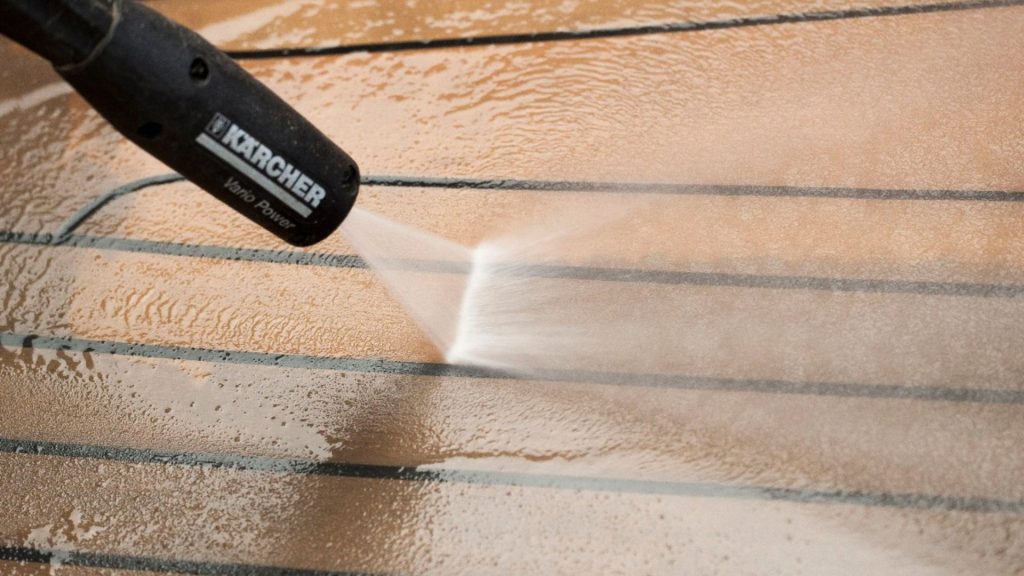
One of the biggest advantages of Flexiteek 3 synthetic decking is how little maintenance it actually needs. Unlike traditional teak, which demands regular sanding, sealing, and oiling to stay in good condition, Flexiteek is designed to withstand the elements with just routine cleaning. A simple wash with fresh water is usually enough to keep the deck looking its best. For tougher stains, a gentle pH-neutral cleaner can be used. Marks and spills can be lifted easily without harsh chemicals. Even minor scuffs can be lightly buffed along the grain to restore the surface. Discover the Flexiteek 5 Step Care Guide here.
This minimal maintenance isn’t just convenient, it directly supports the deck’s long-term durability. The material is UV-stable, hard-wearing, and resistant to water absorption. It doesn’t rely on oils or sealants to protect it from cracking, fading, or warping. As a result, Flexiteek maintains its appearance and structural integrity over decades, even in demanding marine environments.
Flexiteek synthetic decking is highly durable and low-maintenance. Its long lifespan is further supported by the ability to refresh the surface when needed. Over time, the deck may gradually lighten, darken, or show minor wear. These changes are easily corrected by sanding along the grain. Even stubborn marks or scuffs can be lightly sanded to restore the deck’s appearance. This gives it a renewed look without compromising long-term performance.
With just occasional cleaning and the option to refresh the surface through sanding, Flexiteek remains a long-lasting, low-maintenance choice for any vessel.
Is Flexiteek a Cost-Effective Long-Term Decking Choice?
Beyond its durability, one of the strongest arguments for Flexiteek is the financial sense it makes over time. Traditional teak may look beautiful initially, but the ongoing costs of oiling, sealing, and repairing weathered boards add up quickly. With Flexiteek, routine cleaning is all that’s required, meaning you save both time and money on maintenance.
The reduced need for repairs also contributes to long-term value. Unlike some decking materials that deteriorate unevenly or lose their grip, Flexiteek maintains consistent performance, helping avoid unexpected replacement costs. For boat owners, this reliability translates into a predictable budget for the life of the deck.
Finally, there’s the added value of appearance. A well-kept Flexiteek deck continues to enhance the look of a vessel over the years, supporting resale value without the continual upkeep teak demands. In practical terms, this combination of minimal maintenance, consistent performance, and retained aesthetic makes Flexiteek a truly cost-effective choice over the long haul.
A Decking Choice That Lasts
Flexiteek offers an impressive synthetic decking lifespan, combining durability with minimal maintenance to keep decks looking and performing beautifully for years. Its resistance to UV, saltwater, and everyday wear, along with the ability to refresh the surface through sanding, makes it a practical alternative to traditional teak. For boat owners who value low upkeep, lasting performance, and a deck that continues to impress, Flexiteek is a smart, cost-effective choice.
Written and edited by Phoebe Maxted